


This is a hidden post summary. It displays in the editor only.*
The project
Bridging the digital divide for people with disabilities
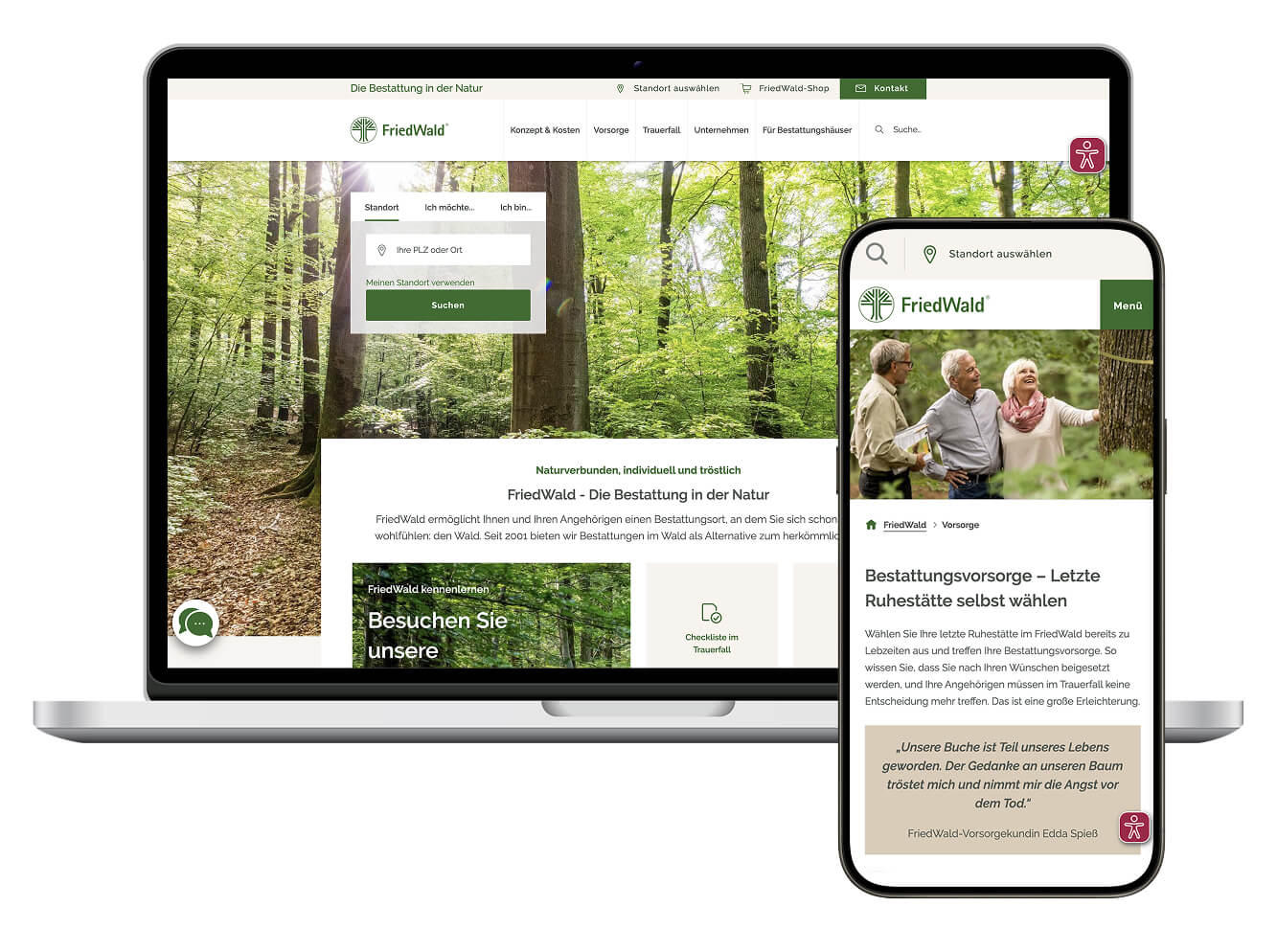
FriedWald’s website serves as a critical source of guidance and information during emotionally sensitive times for families. However, a review of the existing digital presence revealed that it was not fully accessible to all user groups. With a significant portion of visitors being people who rely on clear structures, readable typography, and predictable interaction patterns, the site presented unintended barriers. Essential information was often difficult to locate or comprehend, creating friction precisely when clarity and empathy were most needed.
-

KPIs
103 accessibility issues resolved
-

Project Timeline
November 2024 – September 2026


The goal
Dignity through access
The partnership between FriedWald and SUNZINET was anchored in a clear, long-term vision: to transform accessibility from a compliance checklist into a core attribute of the digital experience. Specific goals included:
- Removing technical and structural barriers across the entire website.
- Achieving full compliance with recognized standards (WCAG 2.2 and BITV 2.0).
- Enhancing usability specifically for elderly users and individuals with disabilities.
- Establishing sustainable accessibility practices within the ongoing development lifecycle.
-
/DSCF9833_1280x1280.jpg?width=1281&height=1281&name=DSCF9833_1280x1280.jpg)
A comprehensive audit based on BIK BITV / WCAG criteria was conducted. This identified concrete deficiencies including insufficient semantic structure, missing text alternatives, and non-accessible interactive components.
-
/DSCF8370_1280x1280.jpg?width=1280&height=1280&name=DSCF8370_1280x1280.jpg)
Findings were translated into actionable tasks within the TYPO3 CMS. Improvements were rolled out iteratively alongside regular releases, minimizing operational disruption while steadily increasing site compliance.
-
/DSCF5625_1280x1280.jpg?width=1280&height=1280&name=DSCF5625_1280x1280.jpg)
The integration of Eye-Able Assist provided an immediate, customizable layer of support. This tool empowers visitors to adjust contrast, font size, and utilize reading assistance based on individual needs, complementing the structural improvements made to the codebase.
-
/DSCF5150_1280x1280.jpg?width=1280&height=1280&name=DSCF5150_1280x1280.jpg)
All updates were validated through practical testing with keyboard navigation and screen readers (NVDA and VoiceOver) to ensure technical compliance translated into a genuinely usable experience.
Accessibility improvements
The project successfully aligned FriedWald's digital presence with WCAG 2.2 and BITV 2.0 requirements. Beyond compliance, the initiative delivered tangible value by embedding inclusivity into the core of the user experience.
In total, we addressed 103 accessibility barriers — some unique to a single element, others recurring across page templates. The specific improvements included:
 Clear Page Structure: The underlying organization of page content was refined so that screen readers can logically announce sections and sub-sections, making it easier for blind and visually impaired users to scan the page quickly.
 Descriptive Image and Icon Labels: Every image and control button now includes hidden descriptive text. This ensures that users who cannot see the screen hear a meaningful explanation of what a picture shows or what a button does.
 Improved Visibility and Contrast: Text and interactive elements were adjusted to meet strict color contrast ratios. This makes the site significantly easier to read for users with low vision or those viewing the screen in bright sunlight. Additionally, the outline that appears when navigating via keyboard is now bolder and easier to track.
 Full Keyboard Control: The entire website can now be navigated without a mouse. Users with motor impairments can use the Tab, Enter, and Escape keys to open menus, browse galleries, and fill out forms seamlessly.
 Predictable Pop-up Behavior: When a dialog window opens (e.g., contact form or cookie settings), the keyboard cursor is now "contained" within that window. This prevents users from accidentally getting lost in the background of the page while the pop-up is active.
 Consistent Landmarks: The page is now divided into clear, labeled zones (like "Main Navigation" and "Search") that screen readers can jump between instantly, reducing the need to listen to the entire page header repeatedly.
 Flexible Display: The site layout remains fully functional and readable when a user zooms in up to 200% or accesses the site via a mobile phone or tablet.
 Language Detection: The site correctly identifies the language of the content, ensuring screen readers pronounce German and any foreign words with the correct accent and inflection.
Value for the customer
Accessibility as the core attribute of the digital experience
The initiative embeds accessibility into FriedWald’s digital strategy for the long term and creates tangible benefits for all stakeholders.
-
Wide reach, direct benefits: With a high five-digit number of visitors per month, the optimizations reach a wide audience — including many people who rely on accessible features to use the website independently and with dignity.
-
Empowered Core Users: Elderly users and individuals with visual, cognitive, or motor impairments can now navigate and consume critical content with significantly reduced friction.
-
Mitigated Legal Risk: The site is aligned with current legal accessibility requirements, reducing exposure to compliance-related challenges.
-
Strengthened Brand Trust: These improvements underscore FriedWald’s position as a responsible and empathetic provider that offers equal support to all family members during sensitive life situations.

Peter Scheffler Director of Public Relations
It’s a great example of how digital inclusion can be achieved.
Accessibility can feel like a moving target, especially with evolving standards like WCAG 2.2 and BITV 2.0. What impressed us most about SUNZINET was their ability to embed these improvements directly into our existing TYPO3 workflow. There was no disruption to our daily operations, yet the transformation has been significant. We now have a sustainable foundation for accessibility, and the integration of Eye-Able gives our users immediate, personalized support. It’s a great example of how digital inclusion can be achieved.
About FriedWald
FriedWald is the pioneer and leading provider of natural burials in Germany, offering tree burials in protected forest areas as an alternative to traditional cemeteries. Operating in close cooperation with public authorities and forestry administrations, the company serves a broad user base with a strong public-interest mission, making digital accessibility a non-negotiable requirement of their online service.